



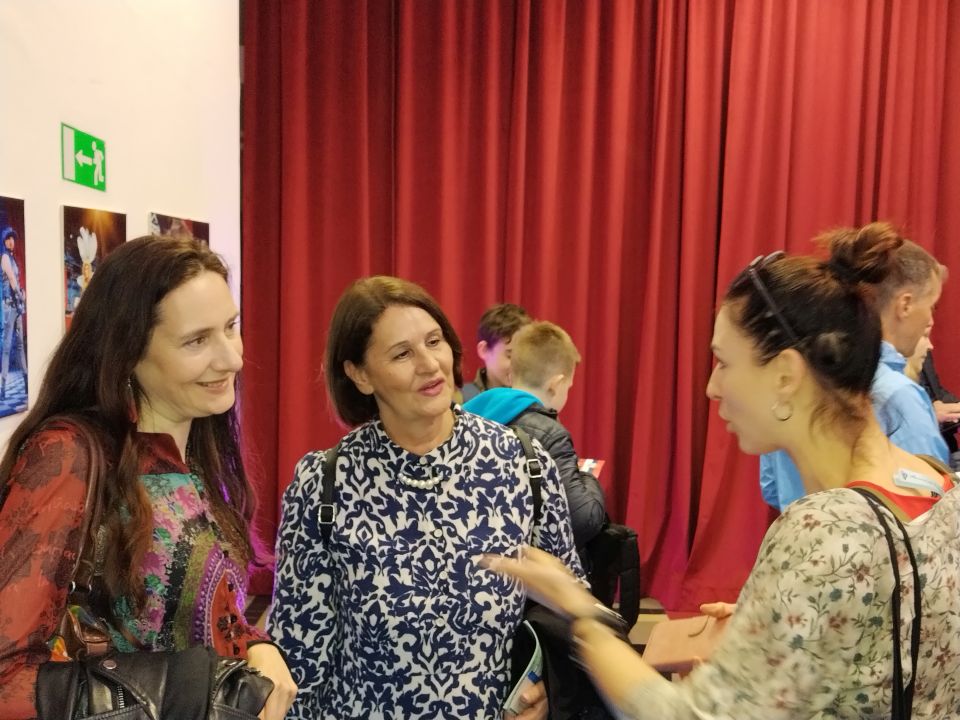
This year's Novi Sad Theater Festival jury panel that will evaluate the performances with utter attention and diligence grace three talented ladies: a costume designer Milica Grbic Komazec, an actress and director Maja Lucic and a journalist and theater expert Olivera Milosevic. This inseparable trio is a regular feature on both stages of the Youth Theater these days.
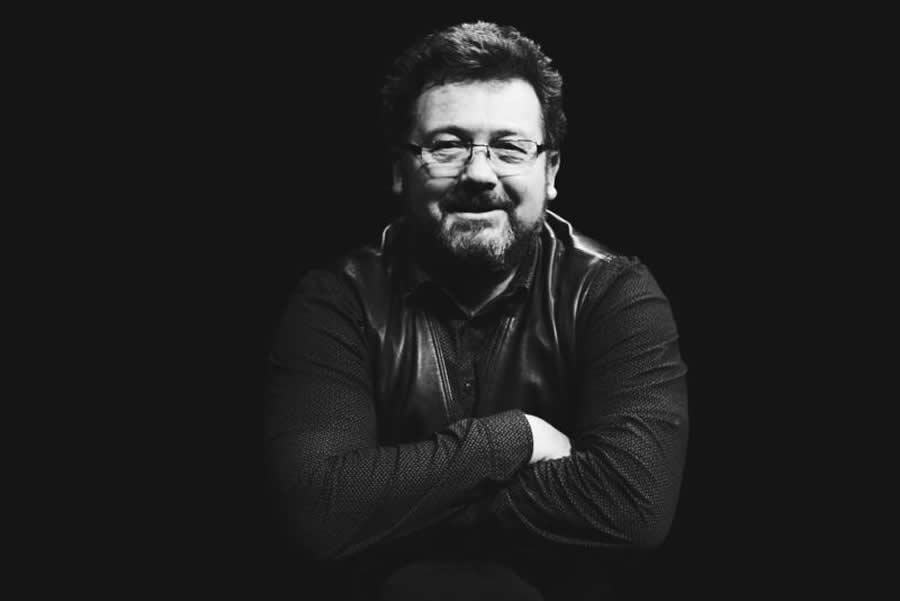
Having seen 67 performances, some submitted for the festival, some by personal invitation or at other shows and festivals, in such colorful and diverse offer, whether it is about the level of production, text, theme, technique, and the way of performing the plays in question, my observation is that in a qualitative sense, at least to my knowledge, sensibility, and ultimately taste, there haven’t been any significant changes compared to the previous year.
With that in mind, my selection of the 2nd Novi Sad Theater Festival will consist of 12 plays that would be in the official competition.
I am not one of those selectors who find a common title for the selected plays, nor was I guided by a given theme. The concept of the festival, without a title, is specific to the Novi Sad Theater Festival, and the basic guideline in the selection of performances was a good performance - that's how I came to this selection.
While watching all those performances, I noticed that the basic guidelines regarding the staging of the plays that are offered to children and young people has not changed. We are still heavily influenced by Covid; it is still used to blame our theatrical failures on it and has remained a basic tool in the defense of lower quality, superficial, ‘safe’ ways some plays are being delivered.
This year's selection of NTF differs from other festivals with a concept of no restrictions, be it in terms of production, genre or anything else. It is important that every play captures the attention of the audience: children or young people. Each of the twelve performances is in itself different from the others and brings some peculiarity that we can hardly see anywhere else. Naturally, they haven’t been chosen just because they were different from the others, but they imposed themselves, whether they brought with them some new skills, techniques, virtuosity, aesthetic experience, innovation, or simply love for the theater.
Mihajlo Nestorovic, Selector and Director of the Novi Sad Theater Festival

Instructive, playful and fast, artistically interesting and musically impressive, that's what "The Goat Trial in Višnja Gora" was like. The performance of the Slovenian National Theater Celje introduced us to six skilled actors, among whom was Urban Kuntarič. Tired, but satisfied with the reaction of the audience, he spoke shortly after the long applause, about how to communicate with the audience today, especially the young, why comedies are so marginal and underrated and how, even at the family level, we have replaced the common good with individualism...
How should you address the young audience today?
For all audiences, especially the young, it's important not to underestimate them, to give them something that's easy for them to watch, but tell them important things. In our play, it was done by speeding everything up, in the rhythm of the generations for which it is intended: there is a quick sequence of stories, a narrative, then there is a joke, a stunt, then music, then again like layers, stories, jokes... The young are used to Tiktok speed, they don't react to anything slower. And this is one of the ways to get closer to them, to introduce them to what you actually want to tell them. You have to think of a way to tell them some stories, it's not enough just to tell them. That's just the way it is, that's the way this time is. You have to combine science and comedy. It seems to me that comedy is a good way to communicate with them. I like comedy. It is always a good way of communicating something about the world.
And why are comedies so marginalized and underestimated, the profession itself underestimates them and looks at them with suspicion, both in the theater for children and in the theater for adults?
I don’t know. We had a comedy festival in Celje some time ago, I had a podcast with the best Slovenian comedians. We agreed that comedy was underrated, that there weren't enough good comedies being made, but basically we didn't understand why. We only concluded that the problem of theater space is that everyone would prefer to do art, to be special, to do some contemporary theater all the time. But I like performances made for the masses, which does not mean commercial or cheap theater plays. People like comedies, they like to laugh, and it's easier to swallow some dangerous things through comedy, things they wouldn't want to hear otherwise. Laughter is what brings us together and it's a fantastic feeling when I'm in a full hall and we're all laughing together. It's so cathartic and wonderful.
What do the children ask you after this play?
Not much, but they are always enthusiastic about goat masks, they want to try them, they really like how we sing.
The Slovenian folk tale, based on which the play was created, teaches us to distinguish good from bad, what is bribery, self-interest. Why, even in a time when everything is much easier to find out than, for example, when children were raised on folk tales, that difference must be constantly taught, pointed out, even to mature generations. Life is fast, liberal capitalism grinds us, and yet, how did we become so terribly alienated from the good?
The problem is individualism. We are a society of individuals. Just me, me, me, me... And we have forgotten about the welfare of the community, the welfare of the society. And that individualism now starts in the family. The violation of the core of the community, the common good, begins in the family. If a family unit works, children can get security, self-confidence, courage, joy, curiosity, that is, all those values that help them, when they go out into the world, to spread values they took and learned from home. Equipped with those values, they will not go astray. But since those values are undermined in the family itself, children do not have a healthy base or support. Because of the constant pressure on people, the need to prove things, to make money, everything has been distorted and shaken. I'm not a parent yet, but people I know who are parents already have problems communicating with their children, because of phones and the Internet. That absence of communication and awareness of the need and importance of that communication makes this world alienated as it is today.
How do you personally resist that rush, the pressure of speed, the imperative of living in two realities - real and online? As an actor, you have to absorb everything, and as a living being, you have to have some normal, safe base...
I have always saved myself by doing sports, riding a bicycle. And I like to read books. I like the saying: the one who doesn't read - lives one life, and the one who reads - lives a hundred. Those are my two bases and they are good for an actor. Because if you live a hundred lives in books, you might be able to live some in the real world.
Snežana Miletić

"Gerda's Room", a play by Osobnjak Theater from Saint Petersburg, is the absolute winner of the first "Novi Sad Theater Festiva". The wonderful play, the wonderful lead actress Alisa Oleynik, pushed the boundaries of experiencing theater magic...
Grand Prix - the prize for the best play is awarded by the jury to the play "Gerda's Room", produced by Osobnjak Theater, St. Petersburg, Russia
The play "Gerda's Room" is uniform in all segments and showed the possibilities and beauty of a theatrical fairy tale by uniting all the components important for the quality of a play: light, music, acting and direction.
The award for the best director is awarded by the jury to Yana Tumina, for directing the play "Gerda's Room", produced by Osobnjak Theater, St. Petersburg, Russia
The award for acting bravura is awarded by the jury to Alisa Oleynik, for the role of Gerda in the play "Gerda's Room", produced by the Osobnjak Theater, St. Petersburg, Russia
The prize for mastery of animation is awarded by the jury to Irena Bausović Tomljanović for several roles in the play "Caffe kingdom", produced by the puppet theater Zadar, Croatia
The jury awarded the "Future of Acting" award to Dominik Karakašić for multiple roles in the play "Cafe Kingdom", produced by the Puppet Theater Zadar, Croatia
The prize for scenography is awarded by the jury to Kira Kamalidinova for the play "Gerda's Room", produced by Osobnjak Theater, St. Petersburg, Russia
The prize for costume design is awarded by the jury to Anisa Kornidova for the play "Gerda's Room", produced by Osobnjak Theater, St. Petersburg, Russia
The special prize for collective play is awarded by the jury to the ensemble of the play "Silent Boy", produced by the Children's Theater Kragujevac, Serbia
The special award for the original director's approach to the theme is awarded by the jury to Tin Grabnar for the direction of the play "Silent Boy", produced by the Children's Theater in Kragujevac, Serbia
The special jury award for innovation goes to Sandrin Lindgren and Ishmael Falke for the play "Invisible Lands", produced by "Livsmeldet" (Grus Grus Theatre), Turku, Finland
The international festival of professional theaters for children and young people "Novi Sad Theater Games" was held as part of the program "Fairy Tales of the Future" Novi Sad - European Capital of Culture 2022.
Congratulations to all awardees.
Photos: Vladimir Veličković
We have to be honest with children, not ignore them
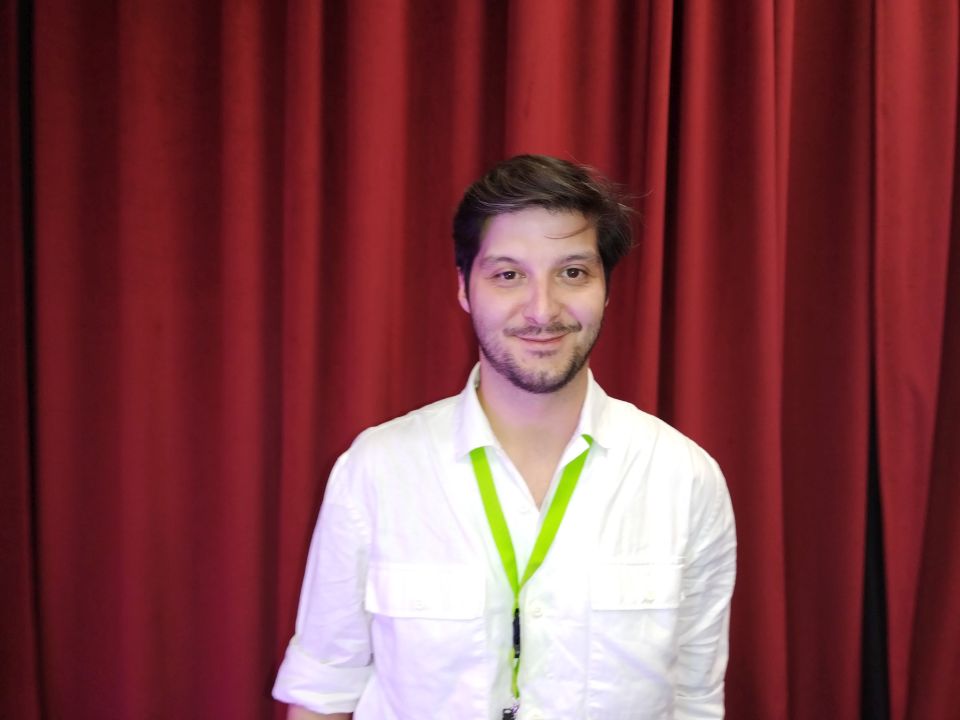
We were enchanted by the first competition performance of the Novi Sad Theater Festival - "Ronia", and its wonderful actors from the Skopje Theater for Children and Youth. Among them is Nikola Nakovski. The guest of our city and the festival of the best European plays for children and young people, which takes place from May 8 to 15 at the Youth Theater, Novi Sad spoke about overcoming prejudices and the wonderful friendship that was born from that – exactly what "Ronia" is teaching us, about how to talk to children today - in the theater and beyond, how to teach them some new tenderness, because the old one has obviously faded, or - obviously - is not doing its job well...
What does that brave robber’s daughter Ronia teach us? What does that story tell the children, what values does it convey to them?
It talks about two conflicting families who hate each other, about hatred that is passed down from generation to generation... A familiar story, right? We have it a lot and often in our lives. At home, around us but also everywhere in the world it is a common story. We witness the hatred and we suffer because of it. Our heroes Ronia and Birk are new hope. Children are our new hope, they have the opportunity to break bad old traditions and stereotypes that are already deeply ingrained in adults. Children open our eyes to change some habits, modify them, and make them positive.
These days in Serbia, we witnessed one child failing to open the eyes of adults as you say, but additionally showing us that we obviously do not see well and do not acknowledge some things in our society. What should you we be saying to children, here in the theater?
My sincere condolences to all those who lost their loved ones. We in Macedonia felt devastated by what happened and we are very shaken. As cultural workers, we have been having the problem of how to initiate and maintain children's attention for some time now. Their concentration is weak and short, in general, it is not much better even among us adults. The new generations are connected to the Internet day and night, and it is very difficult to convince them that the theater can give them some other sensations, that it can trigger their adrenaline in other, more essential ways. We in the theater are constantly under pressure to create the magic we create on a new level that will be interesting and exciting for new generations that will keep their attention. Those children, the first few things they learn about life - they learn with us in the children's theater, through performances, and for us it is not only a challenge, but a serious responsibility. I think that we can no longer, nor must we, lie to ourselves, we who work in the theater must ask ourselves how to approach all this thoroughly and more seriously. I too was a boy and a teenager, and not so long ago I went through various difficulties growing up, through bullying. However, an important difference was the absence of that magical and tragic aspect of freedom called the Internet, that boon of our time which is also and a great monster if it escapes the control of the one who consumes it.
It is obvious that, especially here in the Balkans, we have to start learning some new tenderness, some new communication that will make people emotionally aware. It's paradoxical that after everything that happened here, we are so callous. What have we been taught wrong?
Yes, we are becoming more and more callous, both adults and children. It is very visible and felt. Children get used to living in a kind of ignorance, left to their own devices. Adults justify their emotional absence with chasing financial security, the daily grind, the speed of life, but it's all an excuse. Time must be found. We brought children into the world. We did not ask them if they would come. I can't blame the parents, everyone has their own story and reason, but everything starts from home. In my opinion, that is the base. If you get the right guidance there, you won't be any different outside the home either.
It is also important how many times someone close to you asks you how you are, how you were doing at school, at work, and that instead of the shooting range, they take you to the theater, the park, to some picnic spot...
True, but even when you take your child somewhere, it must not be just the form, a way to fill his time, to do it just for the sake of doing it. You have to make the child experience the importance of seeing the show, of chasing the ball around the park... That kind of communication is another level of art and education, and getting new information in this way means revealing new possibilities, and at the same time discovering new affections. I think it's also very important that both parents, and we in the culture, actually everyone who deals with children, start to take a little more serious approach towards them. We no longer see children as children. We expect them to be adults. I notice this when I talk to the children after the plays. They talk to us like adults. Therefore, we should also have to talk to them with no pretense because children see that, see through us. We often say that children are the most sincere audience, but we say that so naively. And that is the blessing of our acting profession that children express their like and dislike for something and can talk about it. So it shouldn’t end just with - I liked it, I didn't like it. No, that is only a start of conversation, there should be further questions, what they didn't like, why, what they would change, to develop a discussion. In this communication, in this honesty, we must also be very careful, because these are children. But we must be honest as they are to us. And by no means should we ignore them.
Snežana Miletić

Children of the Drama Studio of the Youth Theater – Pozoriste mladih, primary school age from first to fifth grade, were part of the "Young critics" workshops, designed to be one of the supporting programs of the "Novi Sad Theater Festival". During the workshops, after the plays, the children discussed the topics and dilemmas of the authors, the way of working, understanding the text and craft.
The participants of this studio are usually taught about acting and theater by actresses: Neda Danilovic and Slavica Vucetic, and at the workshops held during the festival, the guest educator and moderator was Divna Stojanov.Very interesting, open and witty questions were heard in the meetings of the youngest critics and creators. The children were able to find a way to articulate their feelings about the play they had seen and it seemed that in this pure effort they were more precise than the great critics.
"The workshop 'Young critics' is a kind of introduction to theater art," says Divna Stojanov. "It is intended for preschoolers and younger elementary school students, and its goal is to teach them basic theater concepts and provide tools with which they can watch, understand and analyze the play, and later discuss it. The idea of the workshops is for the youngest viewers to build critical thinking skills, to gain the confidence to express it and to learn to explain why they like the play or not," said Stojanov, who specifies that they always watch the plays together, and then try to go into as much detail as possible, breaking down a complex system such as a theatrical performance. Stojanov believes that children's meetings with artists at the "Novi Sad Theater Festival" are a valuable opportunity for children to ask the authors about their doubts and to exchange impressions and observations.
"Through the workshops, the theater takes on an educational role in a broader sense. In addition to being a place of performance, it also becomes a space for discussion, reflection, learning and exchange of opinions," concludes Stojanov. In addition to all that, after the play, the children also filled out questionnaires in which they wrote down their impressions of the play.
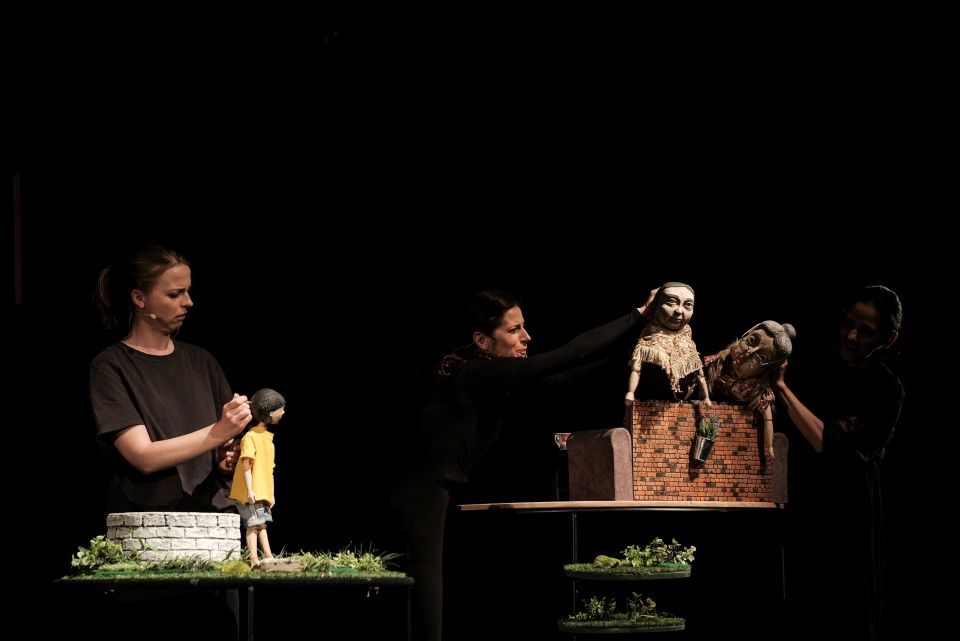
Novi Sad Theatre Festival, the second international festival of professional theater for children and young people, opened on Monday evening at the Novi Sad Youth Theater. With a minute of silence, without pomp and celebration, and under the shadow of recent tragic events, the festival opened with the premiere of the play "Coraline", based on the novella by Neil Gaiman, and directed by Jakub Maksimov. The festival was opened by Dalibor Rožić, the city's Minister of Culture.

There are events by which we remember life and people who change the course of our destiny and consciousness. Likewise, there are theater performances that mark certain times and redefine the concept of an artistic act in us, and in the environment in which they take place, they move the previous scale of experiencing artistic creation.
One such performance - to be remembered by all those who follow theater life in Novi Sad - was 16 years ago at the Sterijino Pozorje Festival. It was called "Fekete ország" (i.e. "Black Land") directed by Arpad Schilling. That fascinating Brechtian structure, which came from Budapest's Kretakor Theater, was a perfectly complex diagnosis of the non-existent lightness of (non-)existence of today's man wrapped in a Kafkaesque centrifuge of impotence before the system. The audience was speechless. And it remained speechless after the paly, long time into the night. Many did not find their way home that night, and some, that same night, found their way to themselves.
Since then, there have been numerous excellent performances in Novi Sad that made the spirit of the audience flutter like birch leaves in the wind, but none - like that Hungarian performance back in 2006, shook this city tectonically.
Until this year, 2022, when one such grandiose performance finally happened again in Novi Sad, which pushed all the limits of human reason and sensitivity. It was "Gerda's Room" of the Osobnyak Theater from Saint Petersburg, directed by Yana Tumina, which, to say the least, was ingeniously played by the fascinating actress Alisa Oleinik. The play was brought to Novi Sad by the first "Novi Sad Theater Festival", an international festival for children and young people organized by the Youth Theatre, Novi Sad.
Primarily thanks to this Russian play, which received the festival's Grand Prix (and was awarded with four other awards: for direction, costumes, scenography and acting), along with the one that arrived from the Finnish Grus Grus Theater, this festival already in its first year presented itself as a notable, new theatrical window to the world. The window which allows us again to become part of the world, in every sense, but only if we make an effort to understand that same world and accept the rules of the game according to which everything functions in it culturally.
Fascinating "Gerda's Room"
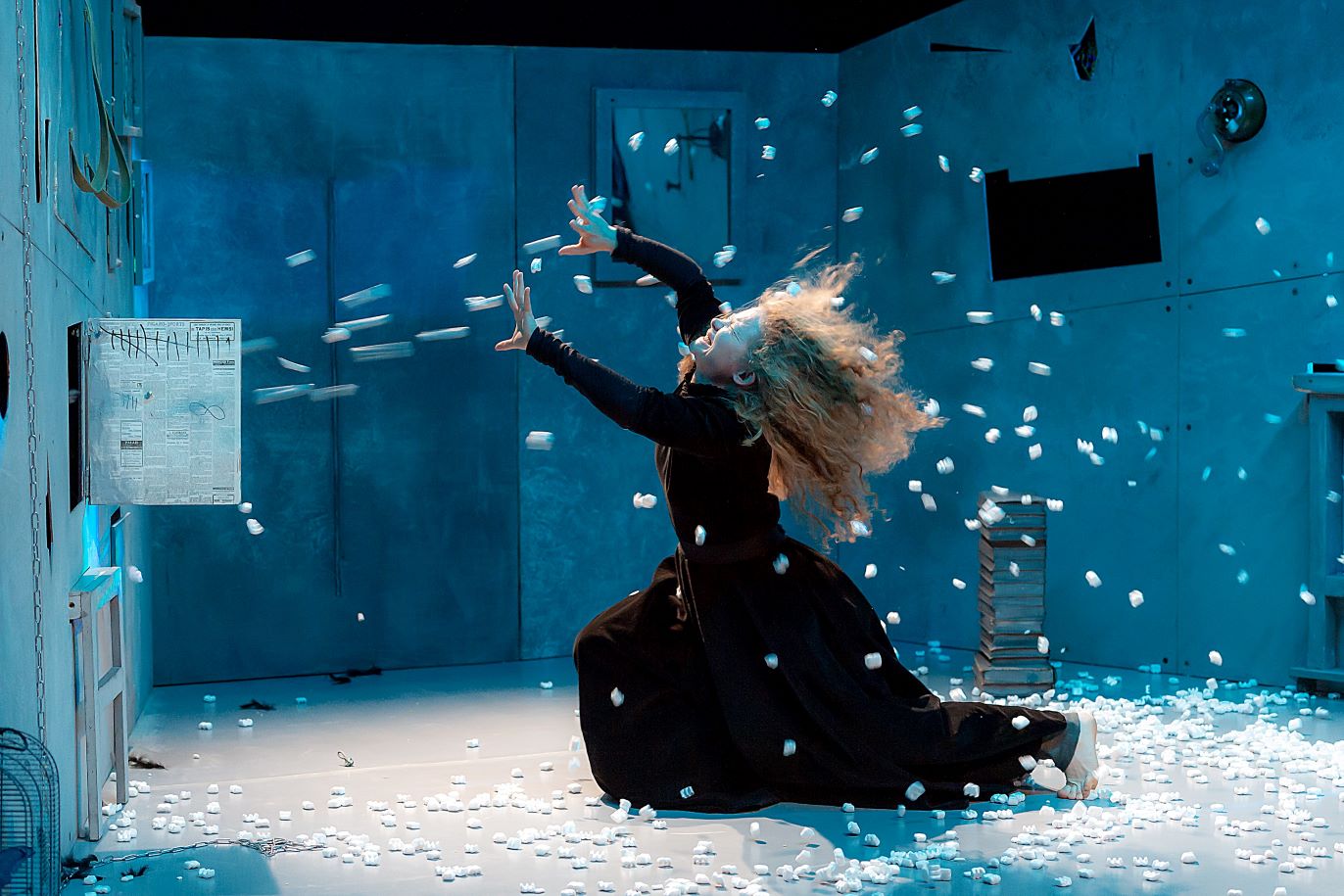 Bearing in mind the fact that there are some things in life, among them some works of art that cannot be understood in words, because even when those words are masterful, they are an unworthy substitute for the emotional effect of the play on a person. Any attempt to verbalize the play "Gerda's Room" is condemned in advance as an insufficiently strong impression to do it justice. And yet, let it be noted...
With her thoughts immersed in Andersen's "The Snow Queen", actress Alisa Oleinik, in collaboration with her colleague Evgeniy Filimonov (his behind-the-scenes work was delivered as precise craftsmanship), created an unreal, wonderful, oneiric world through enchanting images, sounds, music, voice, and movements. who led us with masterly steps to the very epiphany.
Oleinik was Gerda who intelligently and expertly narrated about fear, longing, pain and searching. At a time when everyone would like to erase some of their embarrassing, historical-political, cultural-social faux pas, this play is a rarely honorable example of unrestrained redefinition of the past through the delicate reconstruction of memories.
The arrival of Alisa Oleinik in Novi Sad was – as it turned out - a cultural event par excellence, but also a significant step in raising the local public's awareness of the situation in Russia. Oleinik, otherwise an ardent anti-war activist, was arrested several times in Saint Petersburg (even just before arriving in Serbia) because she demonstrated against the hatred, violence and war between her homeland and Ukraine. For a number of Serbian media, she spoke about how the Russian people are not quite as bellicose towards Ukraine as the pro-state Serbian media tend to claim. On the contrary, there are many people against that senseless war, which in her country cannot even be called a war - it is punishable, but only a "military operation". Despite the draconian Russian laws, and the absence of different tones in the mainstream Russian media, every evening the Osobnyak theater, of which this actress is a part, is lit up in the colors of the Ukrainian flag.
The presence of Russian artists at the "Novi Sad Theater Festival", at the moment of Russian aggression against Ukraine, is actually for another reason - not only solidarity, an exceptional human gesture of The Youth Theater. Russian artists were invited to Novi Sad at a time when the "whole wide world", which can all fit under one computer mouse – and as it seems, to disappear under it, cancels Russian artists and defames Russian culture, punishing even dead Russian writers by insinuating that are pro-Putin's children and one Dostoyevsky, Tolstoy and Chekhov, instead of canceling their shameful politicians who with their unacceptably questionable decisions keep adding to the world's political mess so that the whole world is on the verge of complete madness.
The Russian performance raised the awareness among the audience multifold, and at the same time, made the organizers aware of how poor Serbian theatrical critical thought is. Despite the noticeable media attention to the festival, Serbian critics of the "big media" did not perceive the festival well, so they explained their non-attendance by saying that "Serbian criticism does not follow performances for children and young people". Unfortunately for them, they were deprived of seeing at least two real artistic acts being performed in this, largely parochial, Serbian theater structure, one of which - "Gerda's Room" – is easily brilliant enough to grace the stage in Avignon, Edinburgh or the Berlin Theatertreffen.
Impressive "Invisible Lands"
 Another show that was the very top of the Festival was the Finnish "Invisible Lands". As well as “Gerda’s room”, this performance, not only through the choice of topic, the treatment of the material, but above all through the performance, pointed out how much our theater - not only for children and young people, but theater in general - lags behind both the world and itself. After the performance, the question remained, why something like this is not possible to deliver in our country. There are rather rare exceptions to the rule (an example is the play "On the Wolf’s Trail" by the Youth Theater). It is not that there are no ideas, it is not that local directors don't know how to work with and deliver twists in their plays (Urban, Mladenovic, Lijesevic), but somehow the end result of those efforts turns an initially excellent idea into a flop.
In fact, the main impression of the Novi Sad Theater Festival is that - at least the best - performances from abroad correspond much better with the world around us and with ourselves, that they are not old fashioned neither in terms of means nor performance, and that - very noticeably - they are not burdened with too many words. Those plays from around the world also indicated that our theater, as well as we are here in the Balkans in general, are suffocating under too many words!!! Performances from around the world choose topics more accurately, carefully and comprehensively approach the material, treat it in a complex manner, manage it expertly, and that's why - in whatever genre, manner, and expression they are delivered, the result is visibly better.
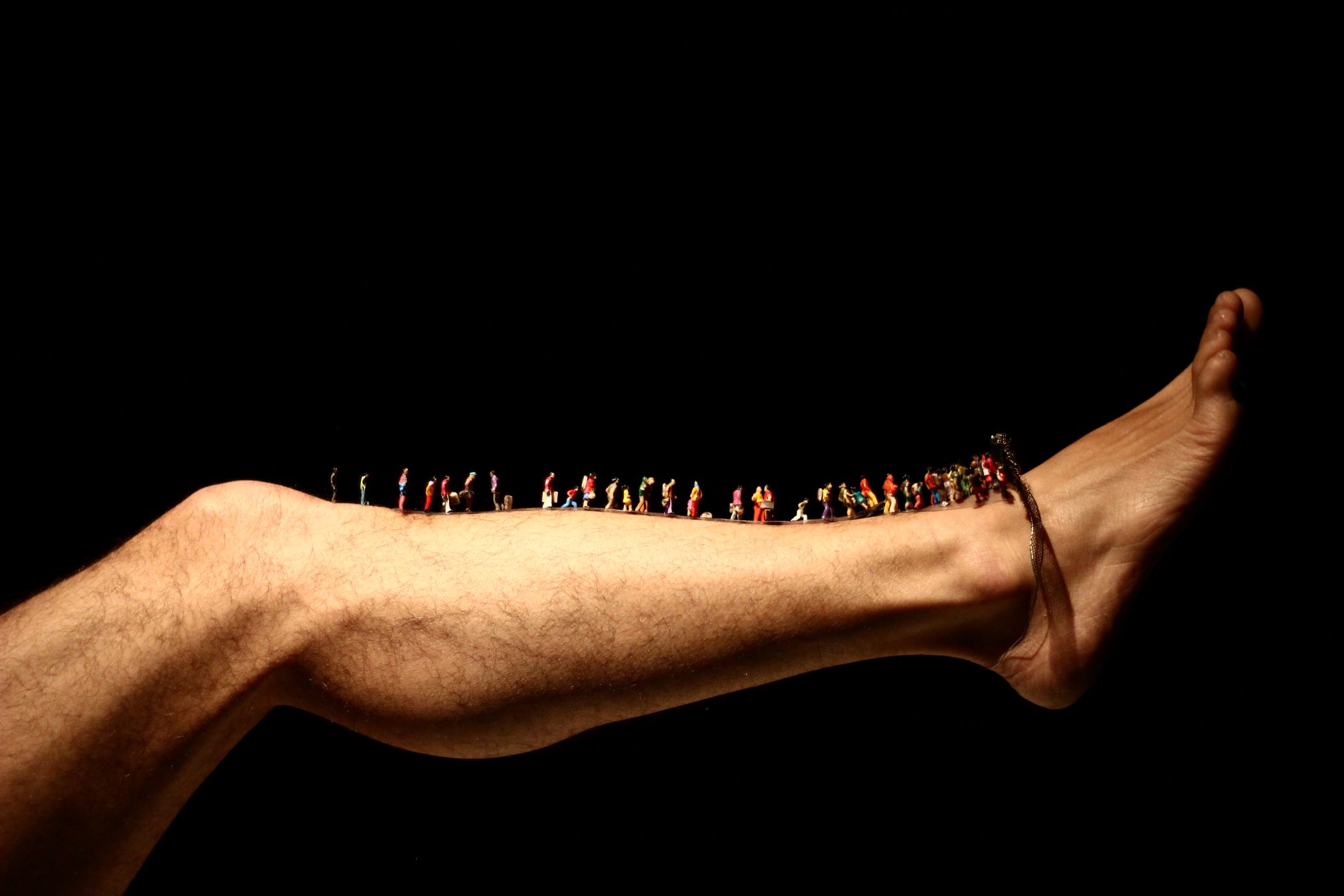
This is also confirmed by "Invisible Lands", which thematizes the broad context of migrant stories. Again, it is not that this topic has not been present in our country, in a series of - unfortunately - mostly senseless theater processes. The author's project of Sandrina Lindgren and Ishmael Falke, who also act in the play, made for the age group over 14, is intended as a way to make young people aware of the world we live in, in which nice notebooks and a new pencil case at the beginning of the school year and clothes as a status symbol are not what the mainstream population of this planet concerns themselves with.
Two authors and actors animate the tiny dolls in an exceptional way, which they transpose onto their bodies with the help of the camera and create an authentic world of our apocalyptic present. Therefore, it is not surprising that the jury of this festival, after precise, comprehensive viewing, awarded the authors of the Finnish play the Special Award for Innovation. The jury included: Bulgarian director Biserka Kolevska, Croatian producer Miran Hajos and Serbian actor Slobodan Ninkovic.
“Kafe Kingdom” and “Silent Boy”
 The audience and the jury liked some other performances of this festival which, at least when it comes to the region, achieved, if not production, then certainly artistic and craft standards. Those shows, with their quality, managed to sensitize children and young people to some life-important topics ("Silent Boy"), but also to entertain them ("Cafe Kingdom").
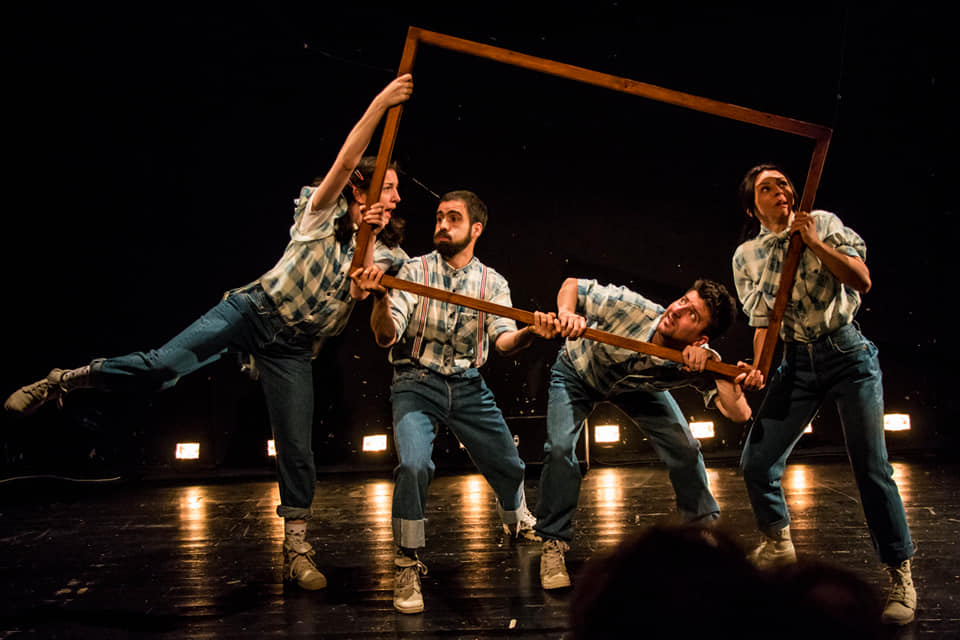
"Kafe Kingdom" directed by Vanja Jovanovic is a vivid production that shows the undoubted acting intelligence of two actors - Irena Bausovic Tomljanovic and Dominik Karakasic (both of whom were awarded for their roles in this play. This Croatian play, by combining objects (cups, bottles, jugs, glasses...) and drama in a fun way, deals with the relationship between children and parents, i.e. the need to find a healthy path from the traditional and expected to self-consecration and self-realization.
The "Silent Boy" from Kragujevac, directed by Tin Grabnar, is based on finger play and the principles of platform theater, in which the actor on stage is an actor, a puppet, a stage element, and a prop. The actors of the Kragujevac Children's Theater responsibly performed the touching story about the boy Vuk and the dangers that lurk around a small child's life.
"The Three Musketeers" and "Chrono Dwarfs"
According to some unwritten theatrical law, every festival for children and young people should have carnival elements, an entertaining and relaxing part – that would tickle the youngest and slightly older audience with theatrical thoughts. In this context, at the "Novi Sad Theater Festival", the hilarious "Three Musketeers" was played, which was charmingly performed by the actors of the Czech theater Alfa from Pilsen in a ferocious rhythm, all with the scenography falling apart at some point.
Before Novi Sad, this show recorded its carnival life on three continents, in as many as 35 countries, making it the most successful Czech show in the 21st century. The puppet version of the legendary novel by Alexander Dumas was performed by Czech artists with comic guignol dolls and in an internationally understandable sign language.
The Slovakian "Chrono Dwarfs" directed by Jakub Maksimov was performed in a slightly less exuberant tone, but the actors from Bratislava, although less extravagant than their Czech colleagues, demonstrated their authentic story of friendship and rebellion in a luxurious space of imagination, in the form of a puppet cinema. It was, to put it most accurately, an adventurous and philosophical story about the ravages of time, the imperative of rebellion - today more than ever, because today - more than ever - we are being euthanized by the stupidities of new media reality.
About other performances of the Festival: "Mahmud" of the Ptuj Municipal Theater/Slovenia, "Chaplin" of the Puppet Theater Košice/Slovakia, "Seven Ravens" of the Children's Theater of the Republika Srpska/Bosnia and Herzegovina, "The Emperor's New Suit" of the Herceg Novi Theater and JUK Hercegfest Herceg Novi/ Montenegro and the "Emperor's New Clothes" of tandem Puppet Theater Maribor/Slovenia and City Puppet Theater Rijeka/Croatia - on another occasion.
Let me ask you...
 "Novi Sad Theater Festival" also hosted daily "Young Critics" workshops, in which children of primary school age from the Drama Studio of the Youth Theater participated. They were prepared for this program by the two top notch actresses of this theater, Neda Danilovic and Slavica Vucetic. After each performance, guided by the expert hand of the moderator, playwright Divna Stojanov, the children talked to the authors and actors of the plays about what they had seen. Children's curiosity and inquisitiveness often opened up the workshop's guests better than any journalist's questions or critics' views.
Beginning and end
The best part of theater Europe that creates for children and young people was seen in part in May, 2022 in Novi Sad - in the Youth Theater, at the "Novi Sad Theater Festival". According to the selector and director of the festival, Mihajlo Nestorovic, that was the goal of the first Festival, for the young Novi Sad audience to see performances that were or still are among the most awarded in their home countries, to gain insight into various, for example, puppetry techniques, to understand what is going on in the world, what is the theater like in some countries about which we know almost nothing (like Finland, for example).
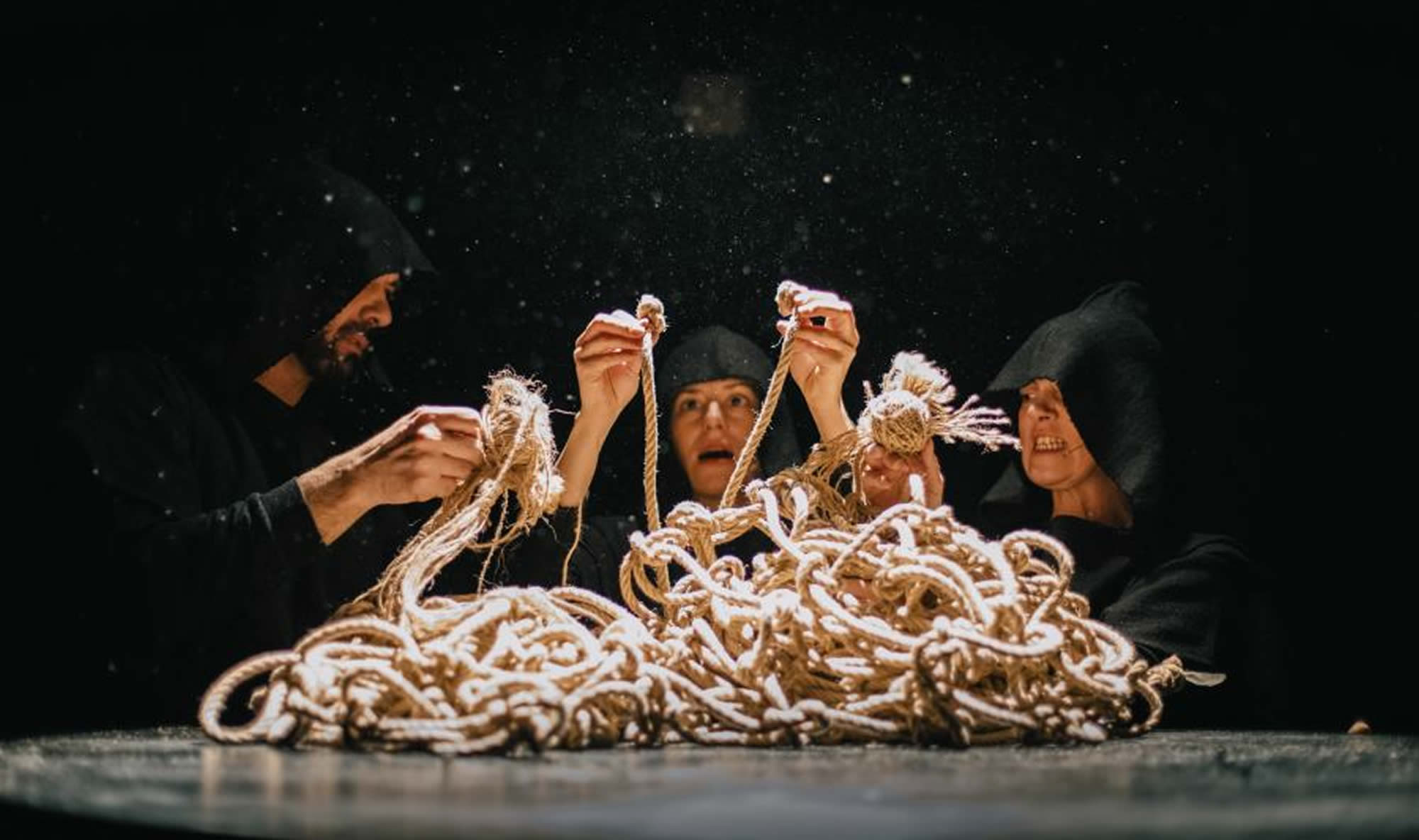
"Novi Sad Theater Festival" opened and closed with the premiere of two performances by the festival host. At the beginning, there was a lavish, glamorous street performance of "Gulliver’s Travels", directed by Kokan Mladenovic, which entertained and delighted hundreds of children in the center of Novi Sad, not only on the day of the premiere, but also in the pre-premier rehearsal days. This play, as well as "Metamorphoses" by Sasa Latinovic, performed in honor of the award winners, which showed in its own way how an original work of art can be created with the help of one material (twine), will remain in the repertoire of the Youth Theater.
To metamorphoses through understanding
 Every era likes to destroy old myths and create new ones. It does this by examining its past in order to make its present better, wanting at the same time to prevent mistakes that may arise on the way to the future. And the future, that's what today's man is madly rushing towards. Philosophers would say - that they shouldn't, because the individual future is actually death. But death is not the worst thing in the future. The worst thing would be if, in this general acceleration without meaning and order, we managed to overtake the present and thus outplay the future. This is precisely what, if we thought about them a little more deeply, the best performances of the "Novi Sad Theater Festival" talked about in various ways. Those plays, and the "Novi Sad Theater Festival" pointed out several things: we should choose the right pace, the right topics and the right people around us. Only in such contexts are works of art created and festivals held so that they contribute to the development of an overall environment.
Paraphrasing the explanation from the program for the already mentioned "Metamorphoses", as a kind of summary of everything that has been said, we could conclude the following: we have seen enough of what kind of sacrifice there could be for the sake of great love and what kind of crimes unfulfilled expectations are capable of. It is time to turn to each other, to get to know each other and recognize that our similarities are greater and more important than our differences. Only at that moment of realization will any one of us, as a human being, be capable of metamorphosis. Hopefully, the performances at the next "Novi Sad Theater Festival" will tell us further stories about them.
Snezana Miletic

Czech director, puppeteer, Jakub Maksymov, who directed the highly successful play "On the walfs trail" at the Youth Theater a few years ago, is back in this theater this spring. In the new play "Coraline", inspired by the mega-popular horror story for children, written by Neil Gaiman, the director has assembled a team of actors, seriously excited and curios, who tirelessly develop and realize the director's ideas during rehearsals. The title role in the play "Coralina" is played by Kristina Savkov, and the entire cast of the play consists of: Neda Danilović, Slavica Vučetić, Jelica Gligorin, Saša Latinović, Slobodan Ninković, Aleksa Ilić, Darko Radojević and Aleksandra Lazin. The music, composed by Lazar Novkov, is performed live by: Aleksa Ilić, Darko Radojević and Aleksandra Lazin, while the choir is the complete cast. The premiere will be on May 8, at the opening of the 2nd Novi Sad Theater Festival.