



 In my mental diary I write "Third time’s a Charm" as an expression of the realisation that I will watch the entire program of the Third International Festival of Professional Theatres for Children and Youth "Novi Sad Theatre Festiva" (May 8-15, 2024) at the Novi Sad Youth Theatre, and the expression "diary " was inspired by the performances of the first two nights: "The Diary of Anne Frank" directed by Renata Vidič and produced by Koper Theatre (Slovenia) and "The Secret Diary of Adrian Mole" by Sue Townsend, adapted and directed by Tanja Mandić Rigonat and produced by the Theatre "Boško Buha" Belgrade (Serbia).
Due to German racial laws against Jews, the Frank family fled Germany to Amsterdam, and after the German occupation of the Netherlands, they hid in the space above the warehouse of the company where Otto Frank worked. Along with Otto, there were members of his family, his wife and daughters Anne and Margot, the van Pels family and the dentist, a total of eight people on fifty square meters. Thirteen-year-old Anne Frank (1929-1945), forced to stay in a shelter, started writing a diary that lasted until they were found (due to betrayal) and taken to a camp from which only father Otto came out after the war. Due to a combination of circumstances, Anna's diary was preserved and her father published it (1947) as one of the most poignant accounts of growing up in such ugly face of adversity. Director Renata Vidič and choreographer Siniša Bukinac turned this harrowing story into a dance performance (music by Mirko Vuksanović), which gave the scenes of Anna's "imprisonment" and her observations (Tina Gunzek) a less horrifying tone and thus became closer to a younger audience (11+). Dancers (Tjaša Bucik, Siniša Bukinac, Vito Colangelo, Patricija Crnkovič, Noemi Bak, Luka Ostrež) follow Anna's story, although their "illustration" is not always completely recognizable. They are mostly dressed according to life in the shelter (costume designer Anja Ukovič) with the exception of "Anna's dance version" (Bucik) who is dressed the same as Anne (Gunzek). Particularly interesting are the video projections (Amar Ferizović) where animated drawings and photographs from outside life alternate (military parades, Hitler in front of enthusiastic crowds, persecution of Jews) and although they show the atmosphere of terror extremely convincingly, it is still strange that they are not more diverse (they even repeat themselves), although there is certainly an abundance of just such pictorial material (then again, perhaps this is in accordance with the pedagogical principle that "repetition is the mother of wisdom"?!).
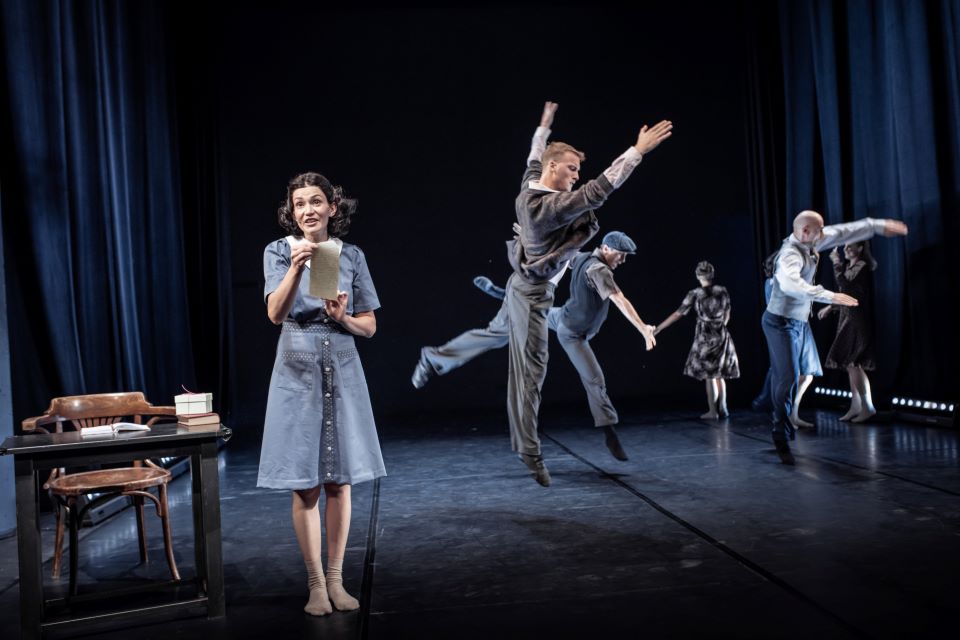 Anna's story (speech, dance, video) depicts the atmosphere of a specific time, the environment in which eight people lived and her intimate preoccupations (love with 16-year-old Peter, the son of family friends who are also in the shelter), so it is surprising that the events of how they were discovered or their departure to the concentration camp were left out. Anne did not predict her death in the diary, but we learn about it from an "external" source, so it could also have been indicated how the shelter was discovered. Because there are good people, but there are also bad people in the world.
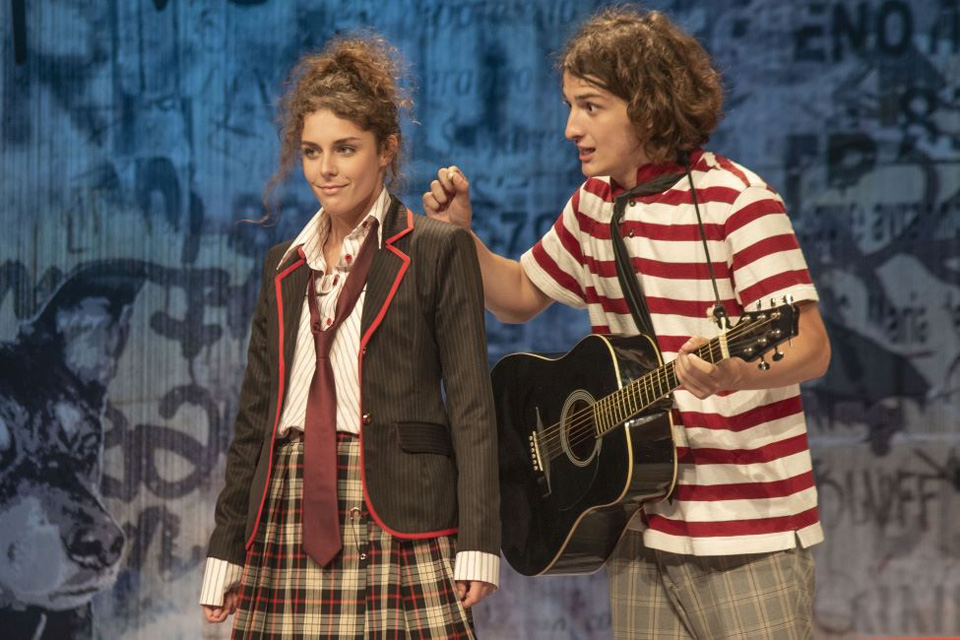 The English writer Sue Townsend (1946-2014) wrote eight novels about Adrian Mole, from his teenage years to middle age, but the most popular is precisely this first novel, "The Secret Diary of Adrian Mole" (1982) when her hero is 13 and ¾ and that reading became a favorite template for theater performances. Milena Depolo dramatized, and the director Mandić Rigonat adapted the text, and there are clearly defined situations that are without major deviations from each other (emotional and dynamic), so the play occasionally loses intensity a little. The scenography (Vesna Popović) is reminiscent of the painted street walls (the purpose of the yellow roof construction is questionable since even without it, it is clear where and what is happening), the costumes (Ivana Vasić) rely on the fashion from the time of the book, and the music (Irena Popović) underlines the atmosphere. It is unnecessary to recount the scenes from Adrian's (Mladen Lero) life, because they are mostly well known: the quarrel between the parents (Andrijana Oliverić, Stefan Bundalo) and the animosity of the grandmother (Katarina Gojković) towards the mother, mother’s departure with the neighbor Lucas (Uroš Jovčić) and the return after she realized that she only loves Adrian’s dad, Adrian's falling in love with Pandora (Anja Pavićević), hanging out with his friend Nigel (Andrej Nježić), troubles with the wicked Barry Kent (Relja Janković) and caring for old Bert Baxter (Zoran Cvijanović). Although Adrian claims to be an intellectual, so he doesn't behave like other "teenagers", Lero is too quiet as an actor in some scenes, and although this shows that he is different, it is not convincing enough. His peers are more natural, and in this case that may be crucial (9+). Since it is a witty and insightful text, I would single out a few comic scenes such as the father's return from fishing, playing Monopoly, grandma tidying up the house or student protests, and it is interesting that the young viewers reacted loudly to the "French" kiss between Adrian and Pandora. Not to mention Baxter's dentures.
Anna's diary and Adrian's diary are a wise choice for a festival of plays intended for children and young people, but I had the impression that both plays could have been a little more artistically provocative.
Olga Vujović
The author is a theater critic from Croatia. She writes for www.kritikaz.com and on the portals wish.hr, fama.com.hr, virovitica.net. She is a member of the Croatian Society of Theatre Critics and Theatrologists.