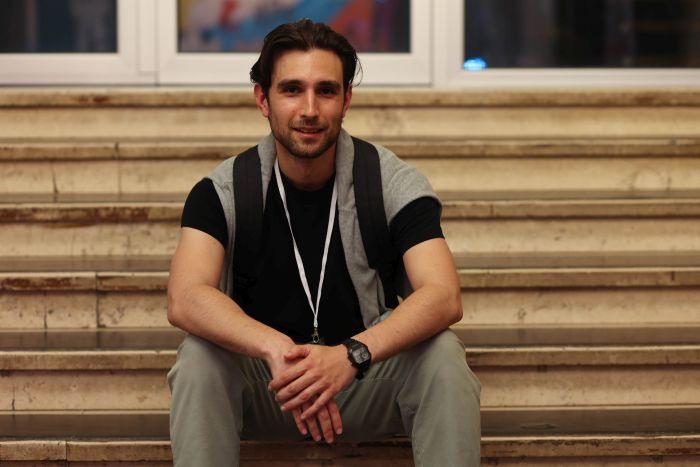

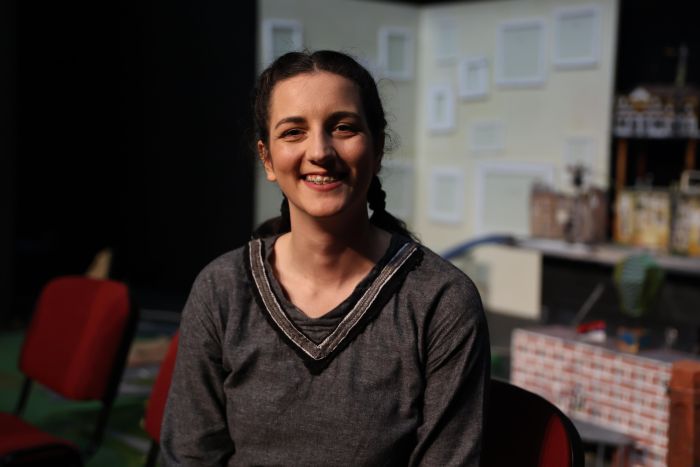
Not only Paris is the city of light. It can be other cities as well, because the light of the city is not lighting. The lights are the people who make it and who, with their spirit, attitude towards the city - build the spirit of the place where they live. The actors from Kragujevac who performed the play "City of Light" at the Novi Sad Theatre Festival told us about one such place in Serbia - their city Kragujevac.
Chilean director and actor David Zuazola directed this unusual play, which revealed to us how Kragujevac breathes, how it used to breathe, but also what kind of theatre its actors are capable of creating. The play told us about the many symbols of the city, from potholes and heavy traffic - which is not exclusively specific of Kragujevac, to the phenomenon of the disappearance of the spirit of the city - which we witness in many Serbian cities and the ecological message in the form of the destroyed Lepenica river, to a strong anti-fascist message, embodied in the story of Šumarice.
One of the actresses in the play, Ljubica Radomirović, spoke about Kragujevac as a city of light...
In the play, you spoke very well about the anti-fascist past of Kragujevac and our country in general, the anti-fascist tradition that today we are ashamed of and push under the carpet. Some true values on which generations grew up are being erased and some other "values" are being written. How much does Kragujevac respect its anti-fascist tradition?
I was born in Užice, and the struggle against fascism is in the blood of the Užice people. I was on an excursion in Kragujevac, I was then in Šumarice, but it's different when you live in that city and understand what happened there. The anti-fascist tradition is very much alive and it is a moment of history that must not be forgotten. Because the newer generations are trying to downplay it, we have to tell the children of each new generation about Šumarica and that suffering, especially since today, unfortunately, we are witnessing a genocide that is happening against a nation, and no one is reacting. I think it is very important that we covered this topic in the theatre for children. People forget and need to be reminded. We experience all kinds of things on a daily basis, the news changes so quickly that we don't even remember some of the recent horrors.
The theater is there to warn and remind us of everything around us...
And it has been doing that for 2000 years.
It is a great responsibility to teach and remind children and young people about environmental and various other social topics... Do you ever get tired?
But that is our task, the theatre should not – whether it is for adults, or children - deal with trivial topics and for people to get mere entertainment. Unfortunately, many people go to the theatre to get mere entertainment and think that’s theatre’s only purpose. But the theatre is a well-mannered educational institution and it's absolutely fine to deal with all these topics. Maybe it discourages someone, but until something changes, until people learn that they should throw garbage in the bin, we need to work on it, be persistent.
Here at the festival, we keep talking about how in Serbia a certain age group of young people in one part of their lives has nothing to watch in the theater. Why aren't we interested in creating the taste of those young people?
We always ask what they are actually interested in, what interests them more, because we wouldn't make plays about Tiktok and Instagram. And then we are always on a seesaw. We opened the Youth Stage about a year ago and, if nothing else, we put on plays based on the mandatory reading material. So, over time we will find out what they would like to watch. Also, they are a little confused, not exactly sure what they would like to see in the theatre.
What kind of audience are children and young people in Kragujevac? Do you manage to get their attention?
We have a really well-groomed audience, parents bring their children, and we also have real fans who watch plays up to 15 times. The culture of going to the theatre in Kragujevac is very much present, even though there is a segment of the population that doesn't even know that there is a theatre, whereas those who know - they adore it.
Snežana Miletić

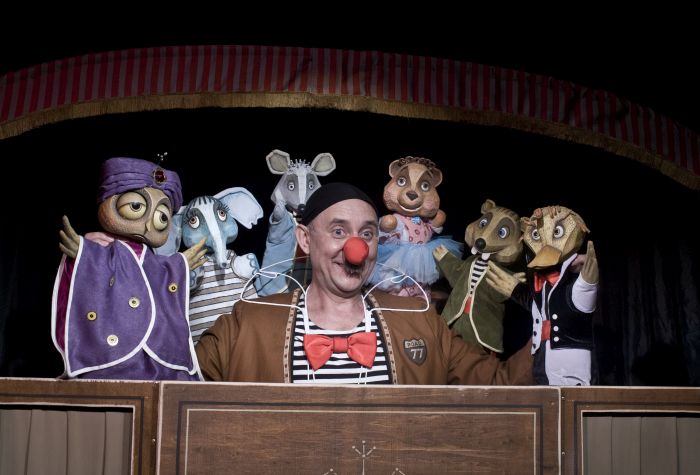
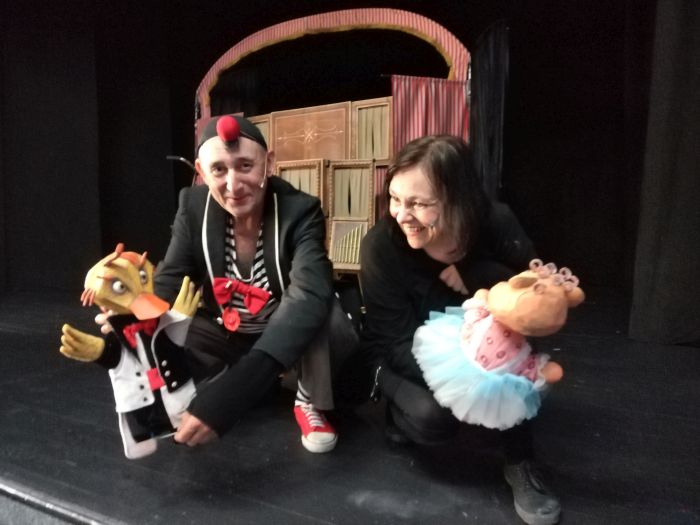

 The author's project of director Vanja Jovanović and playwright Matej Sudarić "Velvet Revolution" produced by the Osijek Cultural Center was performed at the Novi Sad Youth Theatre (May 11) at the Third International Festival of Professional Theatres for Children and Youth - Novi Sad Theatre Festival (May 8-15 2024) and it arrived at the festival under the aura of good "vibrations".
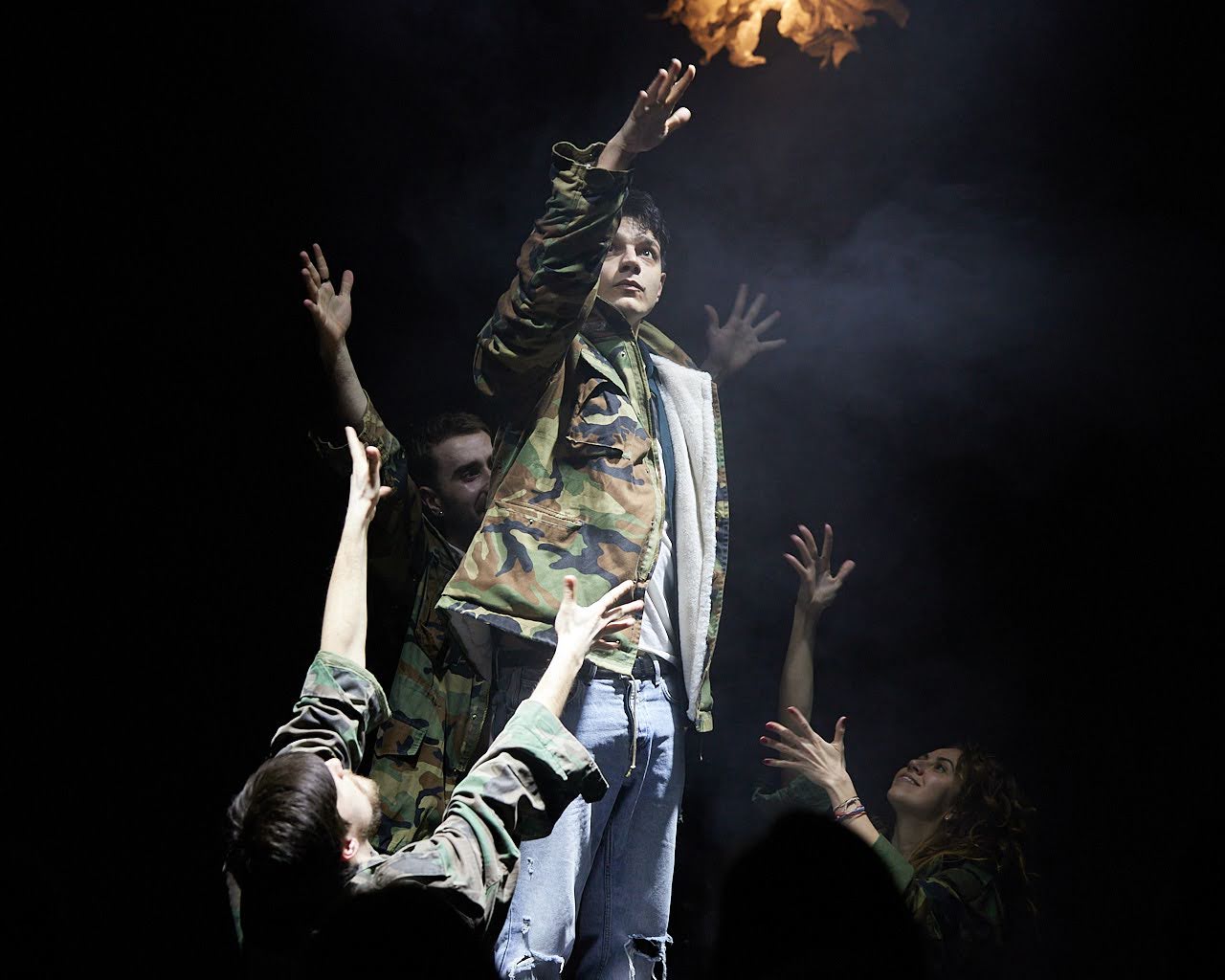 Since I always write through a personal lens, I wonder to what extent the generation gap between me and the characters is an obstacle in recognizing their problems, and how much of it is due to the author's team trying too hard with this: we all had and still have various fears, but at least we try to find a cause for them; whereas, it seems to me that in this play, only the surface has been "scratched" without really investigating what it is all truly about?! What makes this play interesting (and very good) are the actors: especially Vedran Dakić, whose acting energy is a real locomotive. In his acting, everything is dosed and in its place: movement, grimace, sarcastic comment. Despite the role of a "background player" (compared to the energetic Ana in Sara Moser's interpretation), Matko Trnačić coped exceptionally well in the duality of Jan: he would be happy to express himself, but he would not want to insult ayone. The characters of Mila (Tustanovski) and Neno (Radoš) are on that line, but in a smaller contrast, so they all together form a well-balanced cast.
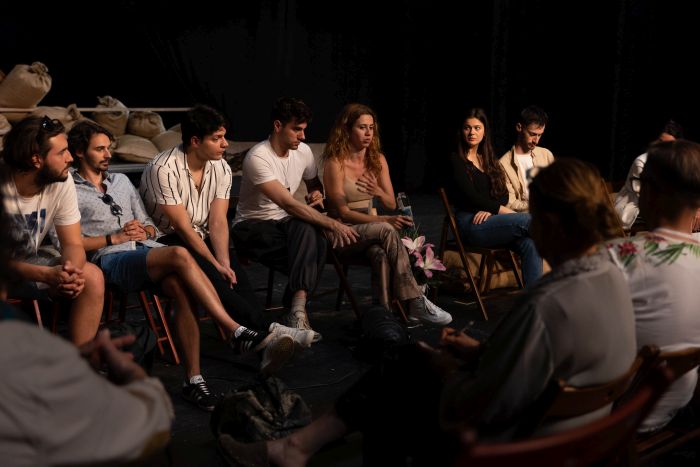

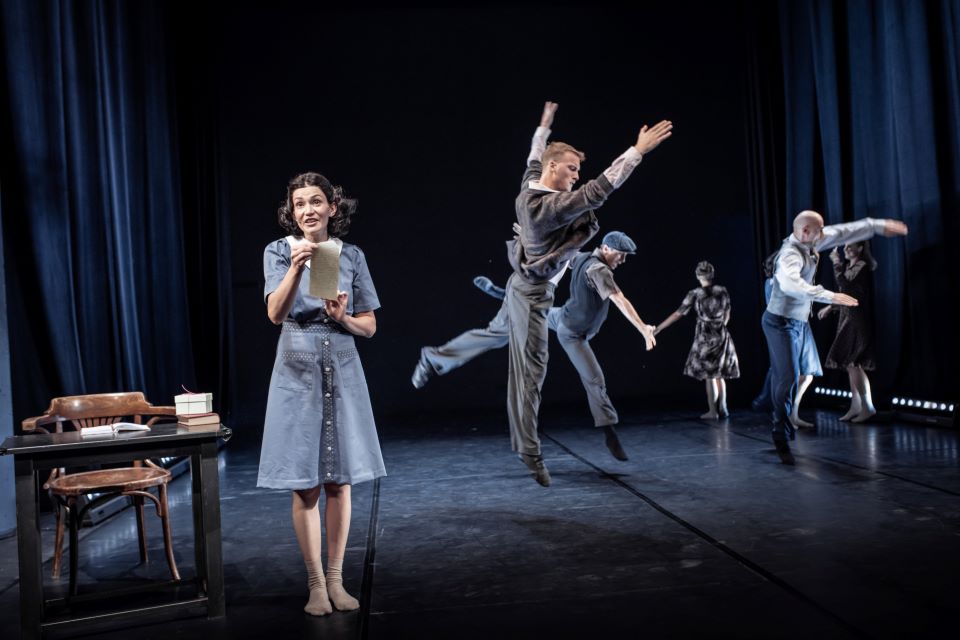 Anna's story (speech, dance, video) depicts the atmosphere of a specific time, the environment in which eight people lived and her intimate preoccupations (love with 16-year-old Peter, the son of family friends who are also in the shelter), so it is surprising that the events of how they were discovered or their departure to the concentration camp were left out. Anne did not predict her death in the diary, but we learn about it from an "external" source, so it could also have been indicated how the shelter was discovered. Because there are good people, but there are also bad people in the world.
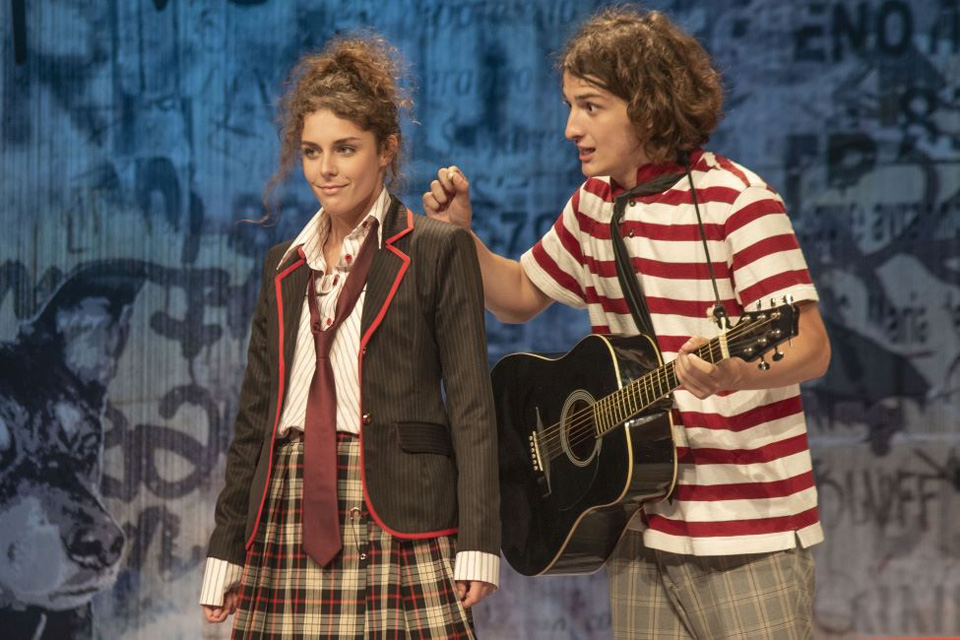 The English writer Sue Townsend (1946-2014) wrote eight novels about Adrian Mole, from his teenage years to middle age, but the most popular is precisely this first novel, "The Secret Diary of Adrian Mole" (1982) when her hero is 13 and ¾ and that reading became a favorite template for theater performances. Milena Depolo dramatized, and the director Mandić Rigonat adapted the text, and there are clearly defined situations that are without major deviations from each other (emotional and dynamic), so the play occasionally loses intensity a little. The scenography (Vesna Popović) is reminiscent of the painted street walls (the purpose of the yellow roof construction is questionable since even without it, it is clear where and what is happening), the costumes (Ivana Vasić) rely on the fashion from the time of the book, and the music (Irena Popović) underlines the atmosphere. It is unnecessary to recount the scenes from Adrian's (Mladen Lero) life, because they are mostly well known: the quarrel between the parents (Andrijana Oliverić, Stefan Bundalo) and the animosity of the grandmother (Katarina Gojković) towards the mother, mother’s departure with the neighbor Lucas (Uroš Jovčić) and the return after she realized that she only loves Adrian’s dad, Adrian's falling in love with Pandora (Anja Pavićević), hanging out with his friend Nigel (Andrej Nježić), troubles with the wicked Barry Kent (Relja Janković) and caring for old Bert Baxter (Zoran Cvijanović). Although Adrian claims to be an intellectual, so he doesn't behave like other "teenagers", Lero is too quiet as an actor in some scenes, and although this shows that he is different, it is not convincing enough. His peers are more natural, and in this case that may be crucial (9+). Since it is a witty and insightful text, I would single out a few comic scenes such as the father's return from fishing, playing Monopoly, grandma tidying up the house or student protests, and it is interesting that the young viewers reacted loudly to the "French" kiss between Adrian and Pandora. Not to mention Baxter's dentures.